Quick answer
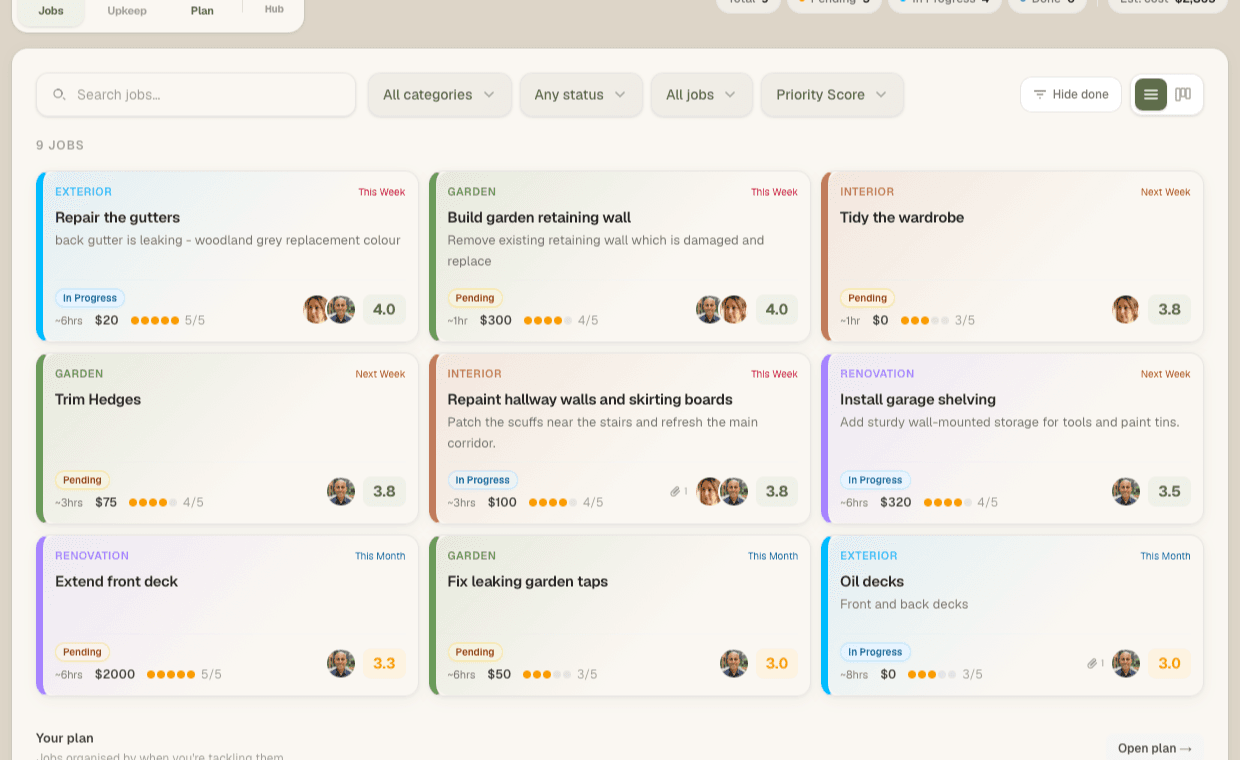
A maintenance planner helps homeowners track repairs, recurring upkeep, household jobs and due dates in one place. The best planner also helps decide what to do first by weighing urgency, effort, cost and available time.
Last updated: 9 June 2026
What makes a maintenance planner useful?
The useful version is not a prettier checklist. It changes how the household decides what happens next.
Most home maintenance lists fail because they only store tasks. They do not tell you whether the slow leak matters more than repainting the spare room, or whether the air filter should sit beside a one-off repair.
A strong planner separates recurring upkeep from one-off jobs, gives every job enough context to make a decision, and shows the work in an order the household can actually act on.
- Capture one-off jobs before they disappear into memory.
- Track recurring upkeep on its own schedule.
- Add effort, cost and importance so priority is not guesswork.
- Assign work to the person doing it.
- Plan around the time people actually have.
A simple planning rhythm
Collect every job without judging it
Start with the messy list: repairs, maintenance, small improvements, safety checks and annoying jobs you keep walking past.
Separate upkeep from repairs
Recurring work needs a schedule. One-off repairs need priority. Mixing them together makes both harder to manage.
Score what matters
Use effort, cost and importance to decide what should rise to the top. This turns vague stress into a ranked list.
Assign and plan
Put names and available time against the work. A plan only works when it fits the household doing it.
Maintenance planner vs ordinary to-do list
| Need | To-do list | Maintenance planner |
|---|---|---|
| Recurring upkeep | Manual reminders | Repeat schedules and due dates |
| Repair priority | Drag items around by feel | Score jobs by practical factors |
| Household coordination | Shared notes at best | Assign jobs and keep one source of truth |
| Long list overwhelm | List keeps growing | Plan shows what to tackle next |
Fields worth tracking
A maintenance planner works best when each job has enough detail to make a decision, but not so much detail that the system becomes another chore.
| Field | Why it helps | Example |
|---|---|---|
| Priority | Shows what should rise above the noise | Loose handrail above repainting a room |
| Effort | Keeps the plan realistic | 30 minutes, 2 hours, full day |
| Estimated cost | Separates quick fixes from budget decisions | Filter replacement vs exterior repair |
| Owner | Makes responsibility visible | Assigned to the person doing the work |
| Repeat cadence | Keeps upkeep from relying on memory | Every 3 months, every 6 months, yearly |
Jobs worth adding first
If you are starting from scratch, add the jobs that carry the most hidden cost.
Water and damp
Leaks, drainage, mould, blocked gutters, roof issues and slow drips.
Safety
Smoke alarms, electrical faults, loose rails, trip hazards and gas checks.
Systems
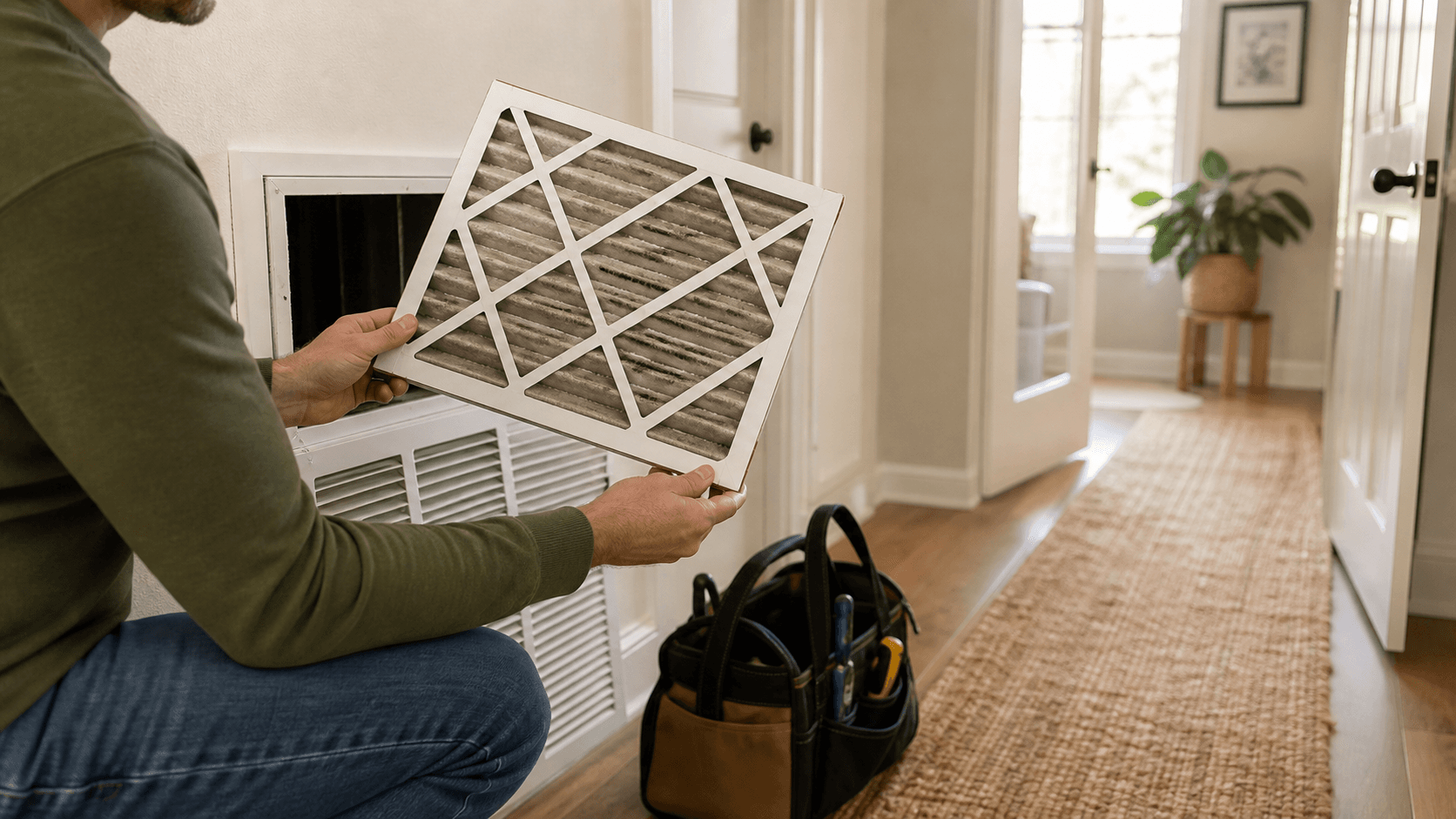
Heating, cooling, water heater, filters, appliance servicing and ventilation.
Annoying repeat jobs
The work you remember only after it becomes inconvenient again.
When a planner becomes worth it
The signal is not the number of jobs. It is the number of decisions the list is making you hold in your head.
A short list can still be hard to manage if some jobs are urgent, some repeat, some need supplies and some belong to another person in the household. That is when a note or spreadsheet starts to break down.
A dedicated maintenance planner is useful when the same questions keep coming up: what should we do first, who owns it, what can wait and what should repeat automatically.
Related guides
Keep building the plan with the next guide that matches where you are in the home maintenance list.
Build a recurring home maintenance schedule
Use the schedule guide when the repeat jobs need dates, reminders and a simple cadence.
Start with a seasonal checklist
Use the checklist guide when you want a practical walkthrough of what to check each season.
Prioritize the repair list
Use the repair priority framework when the list is already long and you need a first move.
Compare home maintenance apps
See which apps fit planning, records, contractor booking and everyday household coordination.
Common questions
What is a maintenance planner?
A maintenance planner is a system for tracking recurring upkeep, repairs and household jobs. A good one stores the list, reminds you when upkeep is due, and helps decide what to do first.
Is a maintenance planner different from a calendar?
Yes. A calendar is good for dates. A maintenance planner also carries context: priority, effort, cost, assignment, status and whether the job repeats.
Can HomeQueue replace a spreadsheet?
For most homeowners, yes. HomeQueue is built for the home job list, so you do not need to build columns, filters and formulas before the list becomes useful.
Plan it in HomeQueue
Turn the maintenance list into a plan.
HomeQueue gives each job a priority score, separates recurring upkeep from one-off repairs, and helps your household know what to tackle next.
Start a free householdFree to start. No credit card needed.