Quick answer
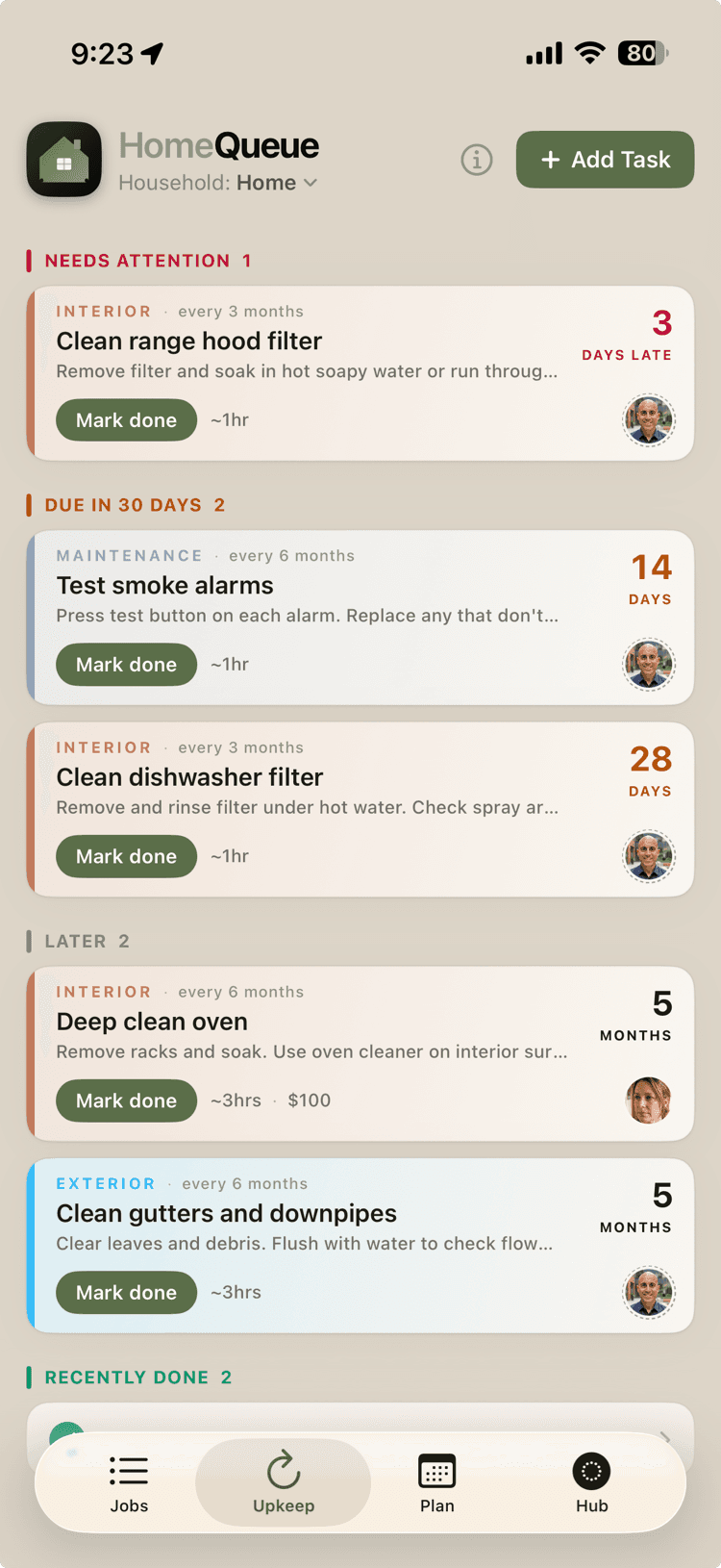
A home maintenance checklist is a seasonal list of small checks and upkeep jobs that keep a home safe, dry and comfortable. The core rhythm is spring exterior recovery, summer cooling and outdoor checks, autumn weather preparation, and winter safety, moisture and emergency checks. Recurring items should become reminders, while one-off repairs should be prioritized.
Last updated: 9 June 2026
How to use this checklist
Treat each season as a prompt to walk around the home, spot small issues early and decide what should repeat.
Not every home needs the same schedule. Climate, age, trees, pets, heating, cooling and how the household uses the space all change the rhythm.
Use the seasonal sections below as a starting point. If a job should repeat, add it as upkeep with a reminder. If you discover damage or a repair, add it to the home jobs list and prioritize it against the rest of the backlog.
Spring home maintenance checklist
Spring is a good time to recover from cold or wet weather, check exterior condition and get airflow systems ready.
Clean gutters and downpipes
Clear leaves, debris and blockages so water can move away from the home.
Check roof and flashing
Look for visible damage, loose material, stains or signs that water has been getting in.
Inspect exterior drainage
Confirm water runs away from foundations, paths, garages and low points around the home.
Replace or clean HVAC filters
A clean filter helps airflow, comfort and system performance before heavier seasonal use.
Check for pest entry points
Seal gaps around walls, doors, windows, vents, eaves and service penetrations.
Test outdoor taps and irrigation
Turn systems on carefully and check for leaks, blocked heads or damaged hoses.
Inspect decks, rails and outdoor steps
Look for loose boards, rot, movement, slippery areas and handrails that need repair.
Check window and door seals
Repair gaps that let in water, draughts, insects or dust.
Summer home maintenance checklist
Summer maintenance is about cooling, outdoor wear, fire risk where relevant and keeping busy household areas safe.
Service or test cooling
Check cooling before peak heat so a repair does not become urgent on the hottest day.
Clean fans, vents and filters
Dust and blocked airflow make cooling systems work harder than they need to.
Inspect deck, fence and exterior paint
Sun, heat and outdoor use can expose peeling paint, loose fixings and timber damage.
Check watering systems
Look for leaks, blocked heads, poor coverage and water pooling near the house.
Review fire risk where relevant
Clear dry debris, overgrowth and stored materials from risky areas around the home.
Inspect windows, screens and seals
Repair damaged screens and seals before heat, insects or weather make them more annoying.
Test smoke alarms and safety switches
Safety checks are quick and easy to forget, so they belong on a recurring list.
Check garage, shed and outdoor storage
Look for leaks, pests, unsafe storage and small jobs that should move to the repair list.
Autumn home maintenance checklist
Autumn is the preparation season: clear drainage, check heating, reduce weather risk and make exterior jobs visible before colder months.
Clear gutters before leaf build-up
High-leaf areas may need more than one check before heavy rain or snow.
Trim branches near rooflines
Branches over roofs, gutters or power lines can create damage and maintenance risk.
Check heating before cold weather
Test heating early enough to book service or repairs before you need it daily.
Inspect chimney or fireplace where relevant
Book cleaning or inspection if the system is used and has not been checked recently.
Check insulation, draughts and seals
Small gaps around doors, windows and roof spaces can affect comfort and energy use.
Review drainage before wet weather
Look at low points, drains, downpipes and places where water has pooled before.
Check exterior lights
Shorter days make broken entry, path and garage lights more noticeable and less safe.
Store or cover outdoor furniture
Protect items that will be damaged by wet, cold, sun or long periods without use.
Winter home maintenance checklist
Winter checks focus on moisture, safety, heating, access and small repairs that are easy to ignore while the home is closed up.
Check for leaks, damp and condensation
Look around windows, ceilings, cupboards, bathrooms, laundries and under sinks.
Protect pipes if freezing is possible
Insulate exposed pipes and know where the water shut-off is before a cold snap.
Test smoke and carbon monoxide alarms
Heating season is a useful reminder to test alarms and replace ageing units.
Check for roof, ceiling and wall stains
Stains after storms can point to leaks that need attention before they spread.
Keep paths, entries and handrails safe
Fix loose rails, slippery spots, poor lighting and trip hazards around entries.
Review emergency kit and shut-off locations
Make sure the household can find torches, batteries, valves, breakers and key contacts.
Clean range hood and appliance filters
Closed-up homes need good ventilation and appliances that can move air properly.
Walk through slow repairs
List the small annoying jobs you keep seeing so they can be prioritized instead of forgotten.
One-off jobs vs recurring upkeep
A seasonal checklist creates two kinds of work. Keep them separate so reminders stay useful and repairs stay visible.
| Checklist finding | Type | Best next step |
|---|---|---|
| Clean gutters every autumn | Recurring upkeep | Add a repeating upkeep reminder. |
| Repair sagging gutter over the back door | One-off repair | Add it as a job and prioritize it by risk, effort and cost. |
| Test smoke alarms monthly | Recurring upkeep | Assign it and repeat it on a schedule. |
| Replace a broken exterior light | One-off repair | Add it to the jobs list with a clear owner. |
| Service heating before cold weather | Recurring upkeep | Create an annual reminder before the season starts. |
What to add to HomeQueue first
Start with the checklist items that are easiest to forget or most costly to delay.
Water, damp and drainage
Leaks, gutters, downpipes, pooling water, roof stains and under-sink checks.
Safety checks and hazards
Smoke alarms, safety switches, handrails, trip hazards, lighting and emergency shut-offs.
Filters, alarms and servicing
The repeat jobs that should not depend on memory.
Exterior jobs that get worse
Paint, timber, roof, fence, deck and drainage issues that compound when ignored.
Jobs needing a named owner
Assign the work so the household knows who is handling it.
Related guides
Keep building the plan with the next guide that matches where you are in the home maintenance list.
Turn checks into a schedule
Use the schedule guide to decide which checklist items should repeat monthly, quarterly or yearly.
Understand recurring upkeep
Use the upkeep guide to keep repeat maintenance separate from one-off repairs.
Prioritize the repairs you find
Use the repair framework when a seasonal check turns into a real job.
Common questions
What should be included in a home maintenance checklist?
A home maintenance checklist should include safety checks, filters, gutters, drainage, roof and exterior checks, heating and cooling, appliance care, pest entry points and small repairs that can become expensive if ignored.
How often should you do home maintenance?
Some home maintenance should happen monthly, such as alarm tests and visible leak checks. Other jobs are seasonal, twice yearly or annual. The right cadence depends on your home, climate, age and systems.
What home maintenance should be done each season?
Spring is useful for exterior recovery and airflow checks, summer for cooling and outdoor wear, autumn for drainage and heating preparation, and winter for moisture, safety and emergency checks.
What is the difference between home upkeep and home repairs?
Home upkeep is recurring maintenance that helps prevent problems. Home repairs are one-off jobs that respond to damage, faults or improvements that need a priority decision.
How do I keep track of home maintenance?
Keep recurring upkeep on reminders, keep one-off repairs in a priority list and assign jobs to the person doing the work. HomeQueue is built around that split.
Plan it in HomeQueue
Turn the checklist into a working home plan.
Add recurring upkeep once, turn one-off repairs into priority-scored jobs, and let HomeQueue show the household what to tackle next.
Start a free householdFree to start. No credit card needed.