Quick answer
Prioritize home repairs by starting with safety, then jobs where delay creates more damage or cost, then repairs that affect daily life. After that, weigh effort and available time so the plan is realistic.
Last updated: 9 June 2026
The repair priority framework
Use this order when the list feels too big to start.
Safety first
Anything that could hurt someone or create immediate risk moves to the top: electrical faults, gas concerns, loose rails, smoke alarms, structural movement and serious leaks.
Cost of delay second
Some jobs get more expensive every month they wait. Water, damp, pests, rot and roof issues usually belong here.
Daily life third
A repair that affects how you live in the home every day can be more important than a prettier improvement.
Effort and time last
Once you know what matters, ask what fits the time you actually have. Small high-impact jobs are often the best way to restart momentum.
Repair priority examples
| Job | Priority signal | Likely action |
|---|---|---|
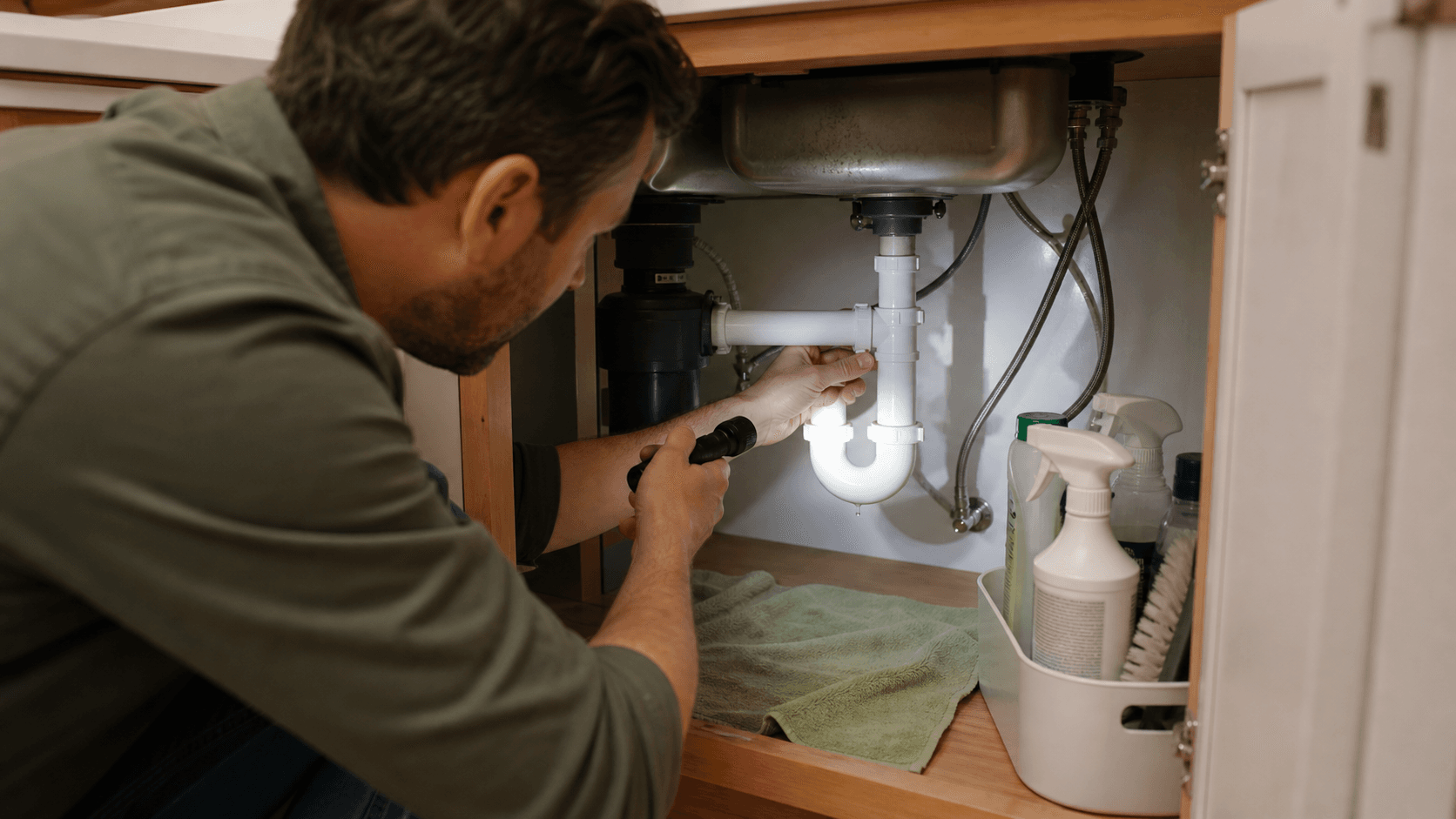
| Slow leak under sink | Water damage risk | Inspect and fix before cosmetic jobs |
| Loose handrail | Safety risk | Move near the top of the list |
| Peeling paint in hallway | Quality of life or cosmetic | Plan after higher-risk repairs |
| Blocked gutter | Water and damp risk | Schedule soon, especially before heavy rain |
| Sticking internal door | Annoying but low risk | Bundle with other quick jobs |
Priority score example
A scoring system makes the trade-off visible when two jobs both feel important.
| Job | Importance | Effort and cost | Decision |
|---|---|---|---|
| Loose handrail | High safety impact | Low effort and low cost | Do first because risk is high and the fix is small |
| Slow under-sink leak | High damage risk | Medium effort and cost | Inspect immediately and schedule the fix before cosmetic work |
| Paint spare room | Low risk | Medium effort and flexible cost | Plan later unless it blocks another job |
| Replace air filter | Routine upkeep | Low effort and low cost | Keep on a recurring schedule rather than a repair list |
Prioritisation needs a plan
A ranked list is only useful if the household can act on it. The highest priority job might still need a full day, supplies or outside help.
That is why HomeQueue combines priority with planning. A job can be important and still need the right time slot.
When to get help
Prioritizing a repair does not mean doing every repair yourself. Electrical faults, gas concerns, structural movement, roof issues and serious water damage can need professional judgement.
The role of a priority framework is to make the next decision clearer: fix it yourself, book help, buy parts or move a lower-risk job out of the way.
Questions to ask before choosing the next repair
Could this harm someone?
If yes, move it to the top.
Will waiting make it more expensive?
Water, pests and structural issues often compound.
Does it affect daily life?
Some non-urgent jobs create constant friction.
Can we finish it with the time we have?
A realistic plan beats a perfect list.
Common prioritization mistakes
Most home repair lists go wrong because the household is sorting by mood, visibility or guilt instead of risk and practical impact.
Doing the most visible job first
Cosmetic jobs feel satisfying, but water, safety and structural issues usually deserve the first look.
Ignoring small jobs that compound
A slow drip, blocked drain or pest gap can become expensive while bigger-looking jobs wait.
Treating every job as urgent
If everything is urgent, nothing is. Sort by risk, delay cost and daily-life impact.
Forgetting available time
A high-priority job may still need parts, budget or professional help before it can happen.
Related guides
Keep building the plan with the next guide that matches where you are in the home maintenance list.
Put repair priority into a maintenance planner
Track priority, owner, effort and cost once the urgent repair decisions are clear.
Keep recurring checks out of the repair list
Use a schedule for filters, alarms, drains and other repeat maintenance.
Choose an app for repair prioritization
Compare apps that help with priority, upkeep, assignment, reminders and household planning.
Common questions
What should I fix first in a house?
Fix safety risks first, then issues that can create more damage if delayed, such as water, damp, pests and structural problems.
What is a simple home repair prioritisation method?
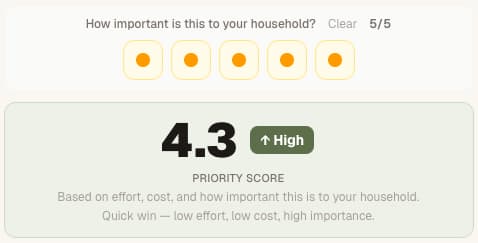
Use four filters: safety, cost of delay, quality of life and effort. HomeQueue turns those ideas into a priority score for each job.
How do I keep track of home repairs?
Use a dedicated home planner rather than a loose note. Track status, priority, effort, estimated cost and who is responsible.
Plan it in HomeQueue
Let the priority score do the sorting.
HomeQueue scores every job by effort, cost and importance, then helps turn the ranked list into a practical plan.
Prioritize my home jobsFree to start. No credit card needed.